Epstein Family: Changemakers
The Epstein Family and ATRI Continue to Lead USC’s Fight Against Alzheimer’s
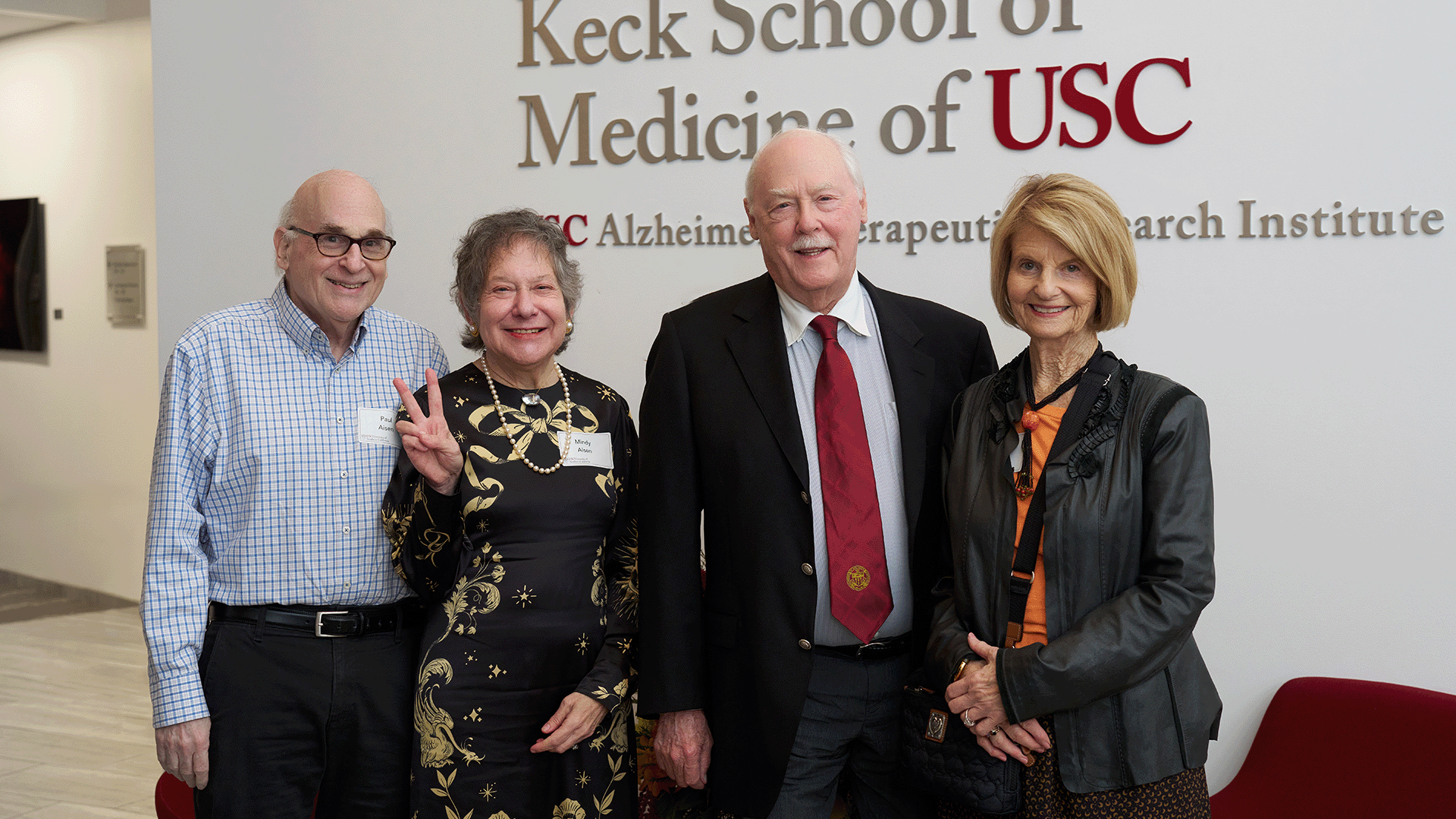
The San Diego-based USC Alzheimer's Therapeutic Research Institute was named in honor of its longtime philanthropic leaders.
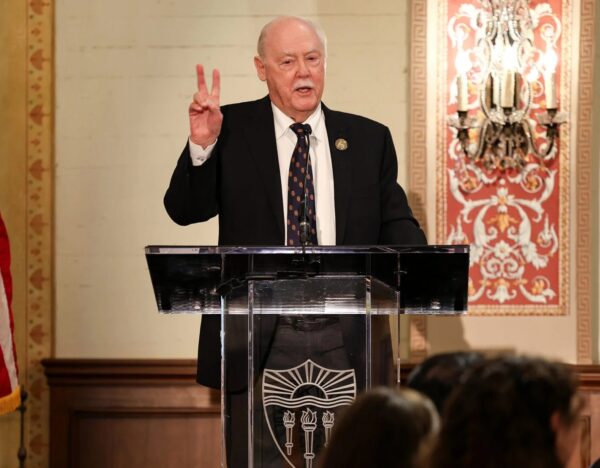
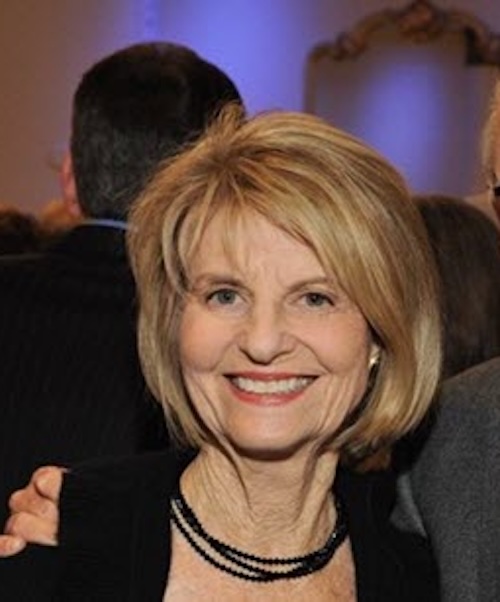
The USC Alzheimer's Therapeutic Research Institute was renamed the USC Epstein Family Alzheimer's Therapeutic Research Institute in honor of Life Trustee Daniel J. Epstein '62, his wife Phyllis and their family, who have been the philanthropic leaders behind the university's world-leading efforts to make Alzheimer's a memory.
"USC is leading the way to end Alzheimer's as we know it, and so much of that work has been made possible by the generosity of Dan and the Epstein family," said USC President Beong-Soo Kim. "Their support of USC's groundbreaking work will be critical in making this terrible disease treatable, and even preventable, in our lifetimes."
The Epsteins' motivation is very personal. Dan's late brother and identical twin, David, lived with Alzheimer's for 15 years before passing away in late 2021. The experience of watching his illness progress — and seeing the impact it had on every member of their family — inspired him to take action.
The family first invested in this important work with their gift to found the Epstein Family Alzheimer's Research Collaboration between USC and UC San Diego in 2022. Their contributions catalyzed next-generation clinical trials, data sharing and ATRI's research into blood biomarkers as signposts that can pick up on abnormalities in the brain — even before a traditional scan.
The vision is bold, simple — and was unimaginable just a few years ago. Epstein ATRI researchers imagine a day when a routine blood test, administered annually at a doctor's visit, detects Alzheimer's disease decades before symptoms appear. Then, a daily pill, also to be built on USC research, stops the disease from ever developing. Together, these future treatments will be the world's first preventive therapy for Alzheimer's.
"The work of the USC Epstein Family ATRI is urgent," said Carolyn Meltzer, dean of the Keck School of Medicine of USC. "The sooner we can achieve accurate, early detection and effective prevention, the more memories we can protect and the more lives we can save."
Dan and Phyllis' support for this critical work is a gift twice over: First, for the researchers whose work is made possible by their investments, and then for the families around the world who can have new hope and confidence in a future without this devastating disease.
"The Epsteins' leadership makes it possible," Meltzer said, "for Dr. Aisen and the ATRI team to lead in the global fight against Alzheimer's disease."